Most people have heard of a standard shoulder replacement. Fewer people know that many surgeons, including the team at Michigan Orthopedic Center, often perform a different procedure called a reverse total shoulder replacement, particularly when there’s damage in the rotator cuff.
So, exactly how do you “reverse” a shoulder replacement surgery? What makes this procedure different from the more standard operation? Let’s take a look!
What Is a Reverse Total Shoulder Replacement?
During both types of total shoulder replacement procedures, the surgeon removes damaged joint tissue and replaces it with prosthetics: a metal ball attached to the upper arm bone and a plastic socket attached to the shoulder blade.
A standard shoulder replacement keeps the natural structure of the joint. The ball stays on the top of the arm bone, and the socket stays in the shoulder blade.
A reverse total shoulder replacement reverses that structure (hence the name). The surgeon places the ball on the shoulder blade, and the socket goes on the upper arm bone.
This switch allows the shoulder to move in a different way, shifting the shoulder’s workload from damaged tendons to stronger, undamaged muscles.
The Benefits of Reversing a Shoulder Replacement
Your shoulder’s function depends on a group of muscles and tendons called the rotator cuff. It stabilizes the joint and guides movement. In cases where a patient has damage in the tendons of their rotator cuff, a standard replacement might not work as well.
Why? Because the artificial joint still relies on the rotator cuff to stay centered and function properly. If those tendons can’t support the joint, the shoulder can remain weak, unstable, or difficult to lift.
A reverse shoulder replacement addresses this problem by changing how the joint works. The procedure:
- Repositions the center of rotation of the shoulder joint
- Allows the undamaged deltoid muscle (the large outer shoulder muscle) to take over movement from the rotator cuff
- Keeps the joint more secure and aligned during motion
As a result, the shoulder doesn’t have to depend on damaged tendons to stay stable.
Four Ways a Reverse Shoulder Replacement Improves Function
Improved Arm Elevation
- The new joint design allows the deltoid muscle to lift the arm more effectively, which helps you raise your arms overhead again.
Better Joint Stability
- The reversed structure keeps the joint centered during motion, which reduces the risk of shifting or instability.
Reduced Pain
- As with a standard joint replacement, the surgeon removes damaged joint surfaces, which prevents bone-on-bone contact that causes pain.
Reliable Outcomes For Complex Cases
- The procedure provides consistent function even when the rotator cuff cannot support the shoulder.
Real-Life Benefits of The Procedure
Thanks to a reverse shoulder replacement, many patients find they can more easily perform activities like:
- Reaching for a high shelf
- Getting dressed
- Carrying light objects
- Combing or washing their hair
- Reaching into a back pocket
- Pushing up from a chair
Why This Procedure Is More Common Than You Might Expect
Many shoulder conditions involve both arthritis and tendon damage, a combination that limits the success of standard replacements. Reverse shoulder replacement offers a reliable solution for these complex cases. It provides consistent results, improves function in difficult situations, and expands treatment options for older adults and active patients.
In fact, there are several situations in which a reverse shoulder replacement might be beneficial for patients, particularly if they have difficulty lifting their arm or experience shoulder and arm weakness during day-to-day activities. Some specific situations include:
- Severe shoulder arthritis with rotator cuff damage
- Large, irreparable rotator cuff tears
- Failed previous shoulder replacement
- Complex fractures (broken bones) in older adults
- Chronic shoulder instability (joint slipping out of place)
A Smarter Solution for Complex Shoulder Conditions
A reverse shoulder replacement might sound contradictory, but it offers a proven solution for patients with severe shoulder damage, especially when the rotator cuff can no longer support the joint. Thanks to this surgery, many of our patients regain the ability to lift their arms, complete daily tasks, and move with greater confidence.
If you’re struggling with severe shoulder pain, the team at Michigan Orthopedic Center can evaluate your condition and recommend the best treatment based on your needs, including whether a reverse shoulder replacement is the right next step.
Schedule an appointment with us today to get started.Sources: https://www.bmj.com/content/385/bmj-2023-077939.abstract, https://www.sciencedirect.com/science/article/pii/S2666638324001543
Elite Care for Hip and Knee Pain or Injuries
ABOUT DR. NOUD
Dr. Noud’s philosophy of caring for people involves creating an understanding of the problem so that together they can determine what the best course of action is. In most instances, there is more than a single way to manage a problem. Dr. Noud prides himself in customizing solutions that best meet the expectation of each patient depending on his/her disability, activity and comfort level. He believes that this approach leads to a closer relationship between himself and his patients and a higher level of satisfaction with this shared decision making.
Dr. Noud is extensively involved both at the local and national level with the education and training of future Orthopedic physicians. Additionally, he teaches and lectures in several annual state of the art comprehensive shoulder courses where he continues to refine and develop successful methods to manage complex shoulder problems.
DR. NOUD IS A LANSING-AREA NATIVE WHO HAS HAD THE
FOLLOWING TRAINING:
- UNDERGRADUATE: Biology, Kalamazoo College, Kalamazoo, MI
- MEDICAL: Graduated AOA (Alpha Omega Alpha Honors Society), University of Michigan Medical School, Ann Arbor, MI
- ORTHOPEDIC SURGERY RESIDENCY: University of Vermont College of Medicine, Burlington, VT
- SPORTS MEDICINE AND SHOULDER SURGERY FELLOWSHIP: San Diego Arthroscopy and Sports Medicine Fellowship, San Diego, CA
CERTIFICATION
- Board Certified – by the American Academy of Orthopaedic Surgeons (AAOS) – 2011
ACADEMIC/CLINICAL APPOINTMENTS
- CORE FACULTY: MSU/Sparrow/Mclaren Orthopaedic Residency Program
- FACULTY: San Diego Shoulder Course: Arthroscopy, Arthroplasty and Fractures Conference 2011-present
- ASSOCIATE MASTER INSTRUCTOR: AANA Fundamentals in Arthroscopy Resident Course, 2010-present
MEMBERSHIPS
- Fellow – American Academy of Orthopaedic Surgeons (AAOS)
- Fellow – Arthroscopy Association of North America
- Fellow – American Orthopaedic Society for Sports Medicine
- Michigan Orthopaedic Society
- Michigan State Medical Society
AWARDS AND PUBLICATIONS
- Member of Alpha Omega Alpha (National Honors Society of Medical Students)
- Author of several Book Chapters and Articles in major shoulder journals/publications
- Recipient of prestigious national “Emerging Leaders in Orthopedics” award as chief resident
HOSPITAL AFFILIATIONS

Take the Next Step Toward Better Movement
Living with severe shoulder arthritis or rotator cuff issues can make daily activities feel like a challenge, but you don’t have to navigate it alone. At Michigan Orthopedic Center, we offer comprehensive, personalized shoulder care to help you find lasting relief. From targeted non-surgical treatments to advanced reverse total shoulder replacement and dedicated rehabilitation, we have you covered.
If shoulder pain is keeping you from the life you love, schedule an appointment with our team. We’ll walk you through the best options for your unique needs, guide your customized treatment plan, and support your recovery every step of the way.
Exercise of the Month
Bent Over Rows
(Upper Back, Shoulders)
Hold a weight in your hand. Slightly bend your knees and bend at your waist to bring your torso forward. Make sure your back remains flat and about parallel to the floor. Pull the weight towards you. Make sure your elbows stay close to your body. Slowly return to the starting position. 3 Sets, 10 Reps. (Materials needed: dumbbells)
Recovery In Lansing, Okemos, And Mid-Michigan
See How Patients Have Recovered In Lansing & Okemos
We’ve helped thousands of people in Lansing, Okemos, and the surrounding Mid-Michigan region return to the life they love. From everyday walkers to elite athletes, our patient’s stories are proof that with the right care and support, healing is possible.

-
“I have never been made to feel like I am just a number.”
Dr. Meredith Heisey recently replaced my left shoulder, she has also repaired both rotator cuffs, and put my wrist back together after a fall while I out of the country. Dr. Heisey does not sugar coat the situation, she tells it like it is and I admire her for that. She and her team are…
–
JANICE K GEARHART
-
“It was a great experience.”
Two weeks ago today I had my right knee completely replaced by Dr. Taunt. He is simply the best. Yes I do have some swelling and stiffness but how many can say that they are at 116 degrees of flex at this stage. In regards to the staff at McLaren , everyone was professional and…
–
TOM N.
-
“I am grateful to be walking again!”
I am very grateful to Dr. Swords. After a traumatic fall from a ladder where I broke my knee in 3 pieces, Dr. Swords excellent work allowed me to walk in 4 months. I was able to get back to work in only four months after surgery. Today I am thankful for the magnificent care…
–
M.S.L.
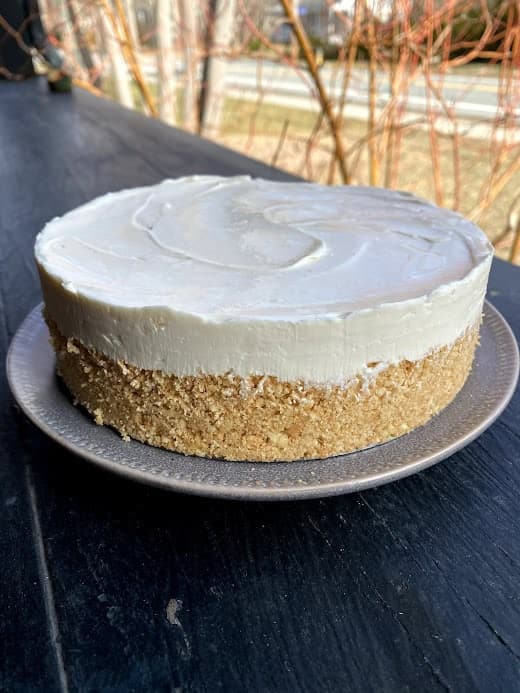
Creamer Tart (U.S. Version)
This simple South African dessert uses just a few ingredients. In the U.S., we swap Tennis biscuits for vanilla wafers or butter cookies, and Cremora for powdered coffee creamer.
- Crust
- 3 boxes (11 oz each) Nabisco Nilla Wafers (or ~2 tins butter cookies, crushed)
- 4 tbsp butter, melted
- Tart filling
- 2 cups powdered non-dairy coffee creamer (like Coffee-Mate)
- ½ cup cold water
- 1 (14 oz) can sweetened condensed milk
- ½ cup lemon juice (fresh preferred)
Instructions
- Make the crust
- . Add cookies to a zip-top bag and crush with a rolling pin, or pulse in a food processor until fine crumbs form.
(Alternative: layer whole cookies in the pan instead of crushing—no need to use all of them.)
2. Transfer crumbs to a bowl, pour in melted butter, and mix until evenly combined.
3. Press the mixture firmly into the bottom of an 8×8-inch pan (or similar). Use a measuring cup to pack it down tightly.
4. Refrigerate the crust while you make the filling.
5. Make the filling
6. In a large bowl, whisk together powdered creamer and cold water until mostly smooth (it may look thick at first).
7. Add condensed milk, then slowly pour in lemon juice while stirring.
8. Keep mixing until it thickens into a smooth, creamy filling.
9. Pour filling over the crust and smooth the top.
10. Cover and refrigerate for at least 1 hour, preferably overnight, until fully set.
11. Slice and serve.
Quick Notes
- Nilla Wafers = closest match to Tennis biscuits
- Butter cookies = richer option (slightly heavier taste)
- The filling sets naturally from the acid + creamer combo—no baking needed 👍