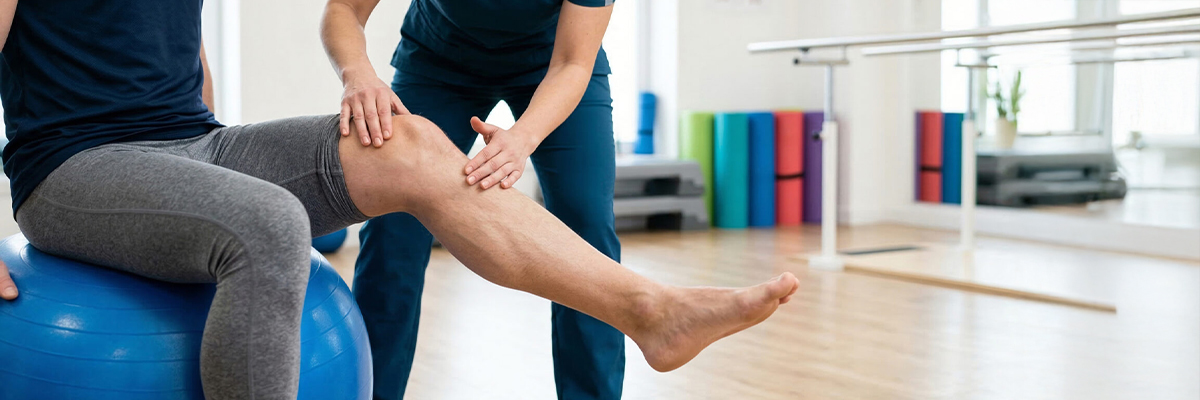
Hip arthritis can slowly change how you move, work, and rest. It might start with stiffness in the morning that gradually worsens to sharp pain when walking, putting on shoes, or standing after sitting for long periods. If left unaddressed, it can have a dramatic impact on your overall quality of life.
At Michigan Orthopedic Center, we regularly work with people living with hip arthritis, as the hip is one of the joints most commonly affected by the condition. Furthermore, the hip joint carries body weight with every step, so damage in this area can affect nearly every daily activity.
The good news is that there are several approaches for managing arthritis, and we’re here to help you find the right treatment for your needs.
A Closer Look at Hip Arthritis
The most common form of hip arthritis is osteoarthritis, which occurs when the cartilage in the joint gradually breaks down. Cartilage acts as a cushion between bones, so when that cushion thins, the bones rub together. This contact causes pain, inflammation, and swelling. As a result, movement becomes harder and more painful.
Common symptoms include:
- A feeling of instability or weakness in the hip
- Deep aching pain in the groin, thigh, or buttock
- Stiffness after rest or sleep
- Limited ability to rotate or bend the hip
- Pain during walking, standing, or climbing stairs

Your Options for Treating Hip Arthritis
Non-Surgical Options
In most cases, we’ll begin with non-surgical treatment. These strategies aim to reduce pain, protect the hip joint, and improve movement. Common approaches include:
- Activity modification to reduce joint strain
- Weight management to lower joint load
- Targeted exercise to improve hip and core strength
- Anti-inflammatory medications, when appropriate
- Injections that reduce inflammation inside the joint
Although it may sound counterintuitive, regular physical activity is critical in managing arthritis symptoms. Prolonged rest weakens the muscles surrounding the hip, reducing joint support and leading to increased pain and stiffness. Guided exercise strengthens the muscles that support the hip, helping to reduce joint load and improve walking mechanics.
For many people, these methods provide meaningful relief. But if pain persists, a hip replacement surgery can be an effective choice.
Hip Replacement Surgery
We generally recommend hip replacement when pain or mobility restrictions persist despite non-surgical treatment and imaging confirms advanced joint damage.
During hip replacement surgery, our surgeon removes the damaged ball-and-socket surfaces of the joint, then replaces them with artificial components that recreate smooth movement between the femur and pelvis. Modern implants are built to tolerate daily use and support long-term function.
Hip replacement surgery aims to reduce pain and restore function. The procedure addresses the mechanical cause of arthritis rather than managing symptoms alone, but it does require comprehensive rehabilitation to ensure the best possible outcomes.
What Recovery Looks Like After A Hip Replacement
Our team of physical therapists can guide you through post-surgical rehab, focusing on restoring joint motion, rebuilding muscle strength, and improving balance, coordination, and gait.
We tailor your rehab program to meet your individual needs, pulling from several key strategies, including:
- Functional tasks such as stair climbing and chair transfers
- Early mobility work to ease the hip back into movement
- Strength training for the hip, thigh, and core
- Walking practice with gradual distance increases
- Balance training to reduce fall risk
Long-Term Function After a Hip Replacement
It can take some time to fully rebuild strength and movement after hip replacement surgery, but if you stick to your rehabilitation plan, you will see steady improvement. A successful recovery depends on several factors, including:
- Consistent rehab participation
- Gradual return to activity
- Clear communication with your care team
- Realistic expectations
The benefits can be immense, however. Replacement surgery can allow you to return to walking, travel, and low-impact exercise, such as swimming or cycling. By giving you the tools to stay active, you’ll be better equipped to manage your arthritis for years to come.
Elite Care for Hip and Knee Pain or Injuries
ABOUT Dr. Ruhland
Dr. Ruhland is passionate about creating a true partnership with his patients. Together they identify limitations, discuss all treatment options and create a plan as a team to accomplish each patient’s individual goals. Having completed the majority of his schooling and training in the Lansing area, he is proud to call this community his home. During fellowship at the Cleveland Clinic in Adult Hip and Knee Reconstruction, he was fortunate to train under pioneers and innovators in the world of joint replacement. While there he benefitted from extensive exposure to all aspects of hip and knee arthroplasty, including outpatient surgery, robotic-assisted joint replacement, direct anterior hip replacement and complex revision surgery
EDUCATION
- BS – Human Biology, Michigan State University, East Lansing, Michigan
TRAINING
- Adult Reconstruction Fellowship: Cleveland Clinic Foundation, Cleveland, Ohio
- Orthopedic Surgery Internship and Residency: Chief Resident, MSUCOM – McLaren Greater Lansing, Lansing, Michigan
- Doctor of Osteopathic Medicine: Michigan State University College of Osteopathic Medicine: East LANSING, MICHIGAN
PROFESSIONAL AFFILIATIONS
- American Association of Hip and Knee Surgeons – Candidate member
- American Academy of Orthopaedic Surgeons – Candidate member
- American Osteopathic Association
HOSPITAL AFFILIATIONS

Take the Next Step Toward Better Movement
Hip arthritis can limit daily life, but several management options can help you find relief. At Michigan Orthopedic Center, we provide comprehensive arthritis care, including non-surgical treatments, hip replacement surgery, and post-surgical rehabilitation.
If hip pain affects how you move or live, schedule an appointment with our team. We’ll explain the best options for your needs, guide your treatment plan, and support your recovery at every stage.
https://www.sciencedirect.com/science/article/abs/pii/S1521694223000219
Exercise of the Month
Figure 4 Bridge
(Glutes, Hips)
Begin on your back. Bend your knees and keep your back flat on the ground. Cross one leg over the other so that your legs make a “4”. Gently, contract your abdominals and hold to keep your back flat as you move up into the bridge position. Remember to breathe. Gently, squeeze your butt muscles and lift your hips off the ground. The goal is to have your hips aligned with your knees and shoulders. 3 Sets, 10 Reps.
Recovery In Lansing, Okemos, And Mid-Michigan
See How Patients Have Recovered In Lansing & Okemos
We’ve helped thousands of people in Lansing, Okemos, and the surrounding Mid-Michigan region return to the life they love. From everyday walkers to elite athletes, our patient’s stories are proof that with the right care and support, healing is possible.

-
“I have never been made to feel like I am just a number.”
Dr. Meredith Heisey recently replaced my left shoulder, she has also repaired both rotator cuffs, and put my wrist back together after a fall while I out of the country. Dr. Heisey does not sugar coat the situation, she tells it like it is and I admire her for that. She and her team are…
–
JANICE K GEARHART
-
“It was a great experience.”
Two weeks ago today I had my right knee completely replaced by Dr. Taunt. He is simply the best. Yes I do have some swelling and stiffness but how many can say that they are at 116 degrees of flex at this stage. In regards to the staff at McLaren , everyone was professional and…
–
TOM N.
-
“I am grateful to be walking again!”
I am very grateful to Dr. Swords. After a traumatic fall from a ladder where I broke my knee in 3 pieces, Dr. Swords excellent work allowed me to walk in 4 months. I was able to get back to work in only four months after surgery. Today I am thankful for the magnificent care…
–
M.S.L.

Sweet Potato Spinach and Chickpea Curry
A hearty sweet potato spinach and chickpea curry that is meat-free and packed with vegetables. Serve on a bed of rice or with bread or enjoy on its own.
- Ingredients
- 1 medium Onion finely diced
- 1 medium Sweet potato diced into 1cm (⅓ in) cubes
- 2 tins Canned chickpeas drained and rinsed
- 2 cans diced tomatoes
- 4 tablespoons Curry paste heaping
- 2 large handfuls Baby spinach leaves
- 2 handfuls Coriander leaves (Cilantro)
- 1 cup Warm water
- 1 tablespoon Olive oil
Instructions
Over medium heat, add the olive oil and onion in a large saucepan and soften for approximately 5 minutes. Add the curry paste and a splash of water and cook for 1 minute
Add the sweet potato chunks, canned chopped tomatoes and chickpeas and coat well in the curry paste. Add the water and bring to the boil. Reduce the heat to low, cover and gently simmer for 20 minutes, or until the sweet potatoes are tender. Remove the lid and cook for a further 5-10 minutes, until the curry has reduced slightly. Stir through the baby spinach leaves and simmer for 1 minute, then turn off the heat.
Season to taste with a pinch of salt and pepper. Serve topped with fresh coriander leaves with a side of rice.