One of our patients, who we’ll call Michael, was a middle-aged teacher with a passion for hiking. He faced an unexpected challenge when a sharp pain in his knee turned into a persistent problem, affecting not only his favorite outdoor activities but also his ability to stand comfortably in front of his classroom.
After several consultations, an MRI revealed a torn meniscus requiring surgery. The prospect of surgery was a big concern to Michael, who had never faced such a significant medical procedure. However, his orthopedic surgeon recommended a comprehensive approach to ensure the best possible outcome: engaging in pre- and postoperative physical therapy.
The Road to Surgery: Preoperative Physical Therapy
Understanding the importance of being in optimal physical condition for the surgery, Michael was referred to Michigan Orthopedic Center for preoperative care. Our goal was to maximize his range of motion and strengthen his knee as much as possible before the surgery to aid his recovery.
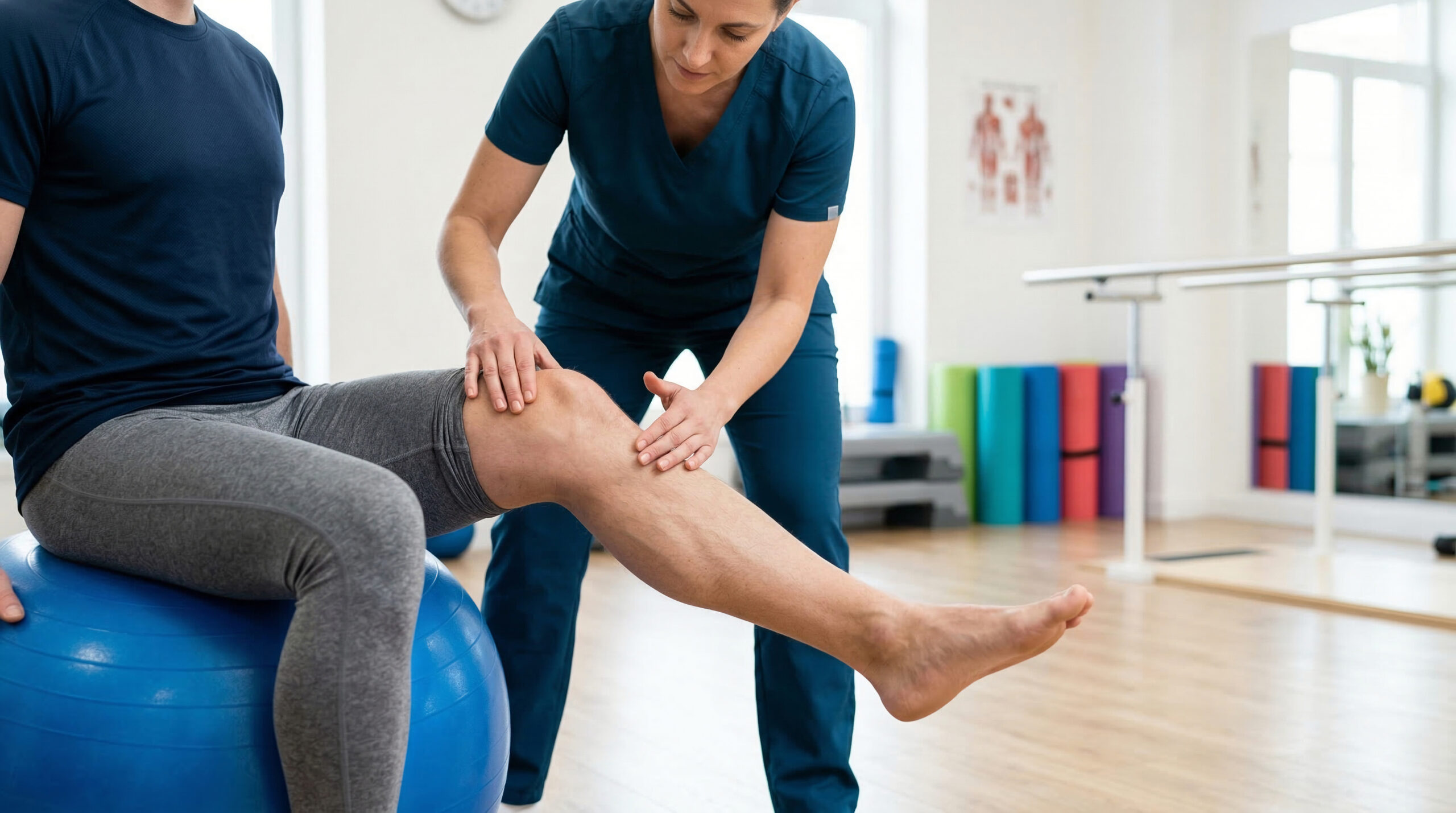
Michael met with one of our physical therapists, who explained how pre-surgical physical therapy could make a significant difference in his recovery process. His therapist tailored a program focusing on building strength, improving his mobility, and getting him as prepared as possible for surgery and the recovery afterward.
Preoperative physical therapy sessions included a variety of exercises designed to enhance the stability of Michael’s knee alongside manual therapy techniques to free up restrictions, mobilize his knee, and help manage his pain.
His therapist also educated Michael about how to best prepare mentally and physically for post-surgery rehabilitation. This proactive approach helped Michael enter the surgery with a stronger knee and equipped him with the knowledge and confidence needed to face his recovery.
Navigating Recovery: Postoperative Physical Therapy
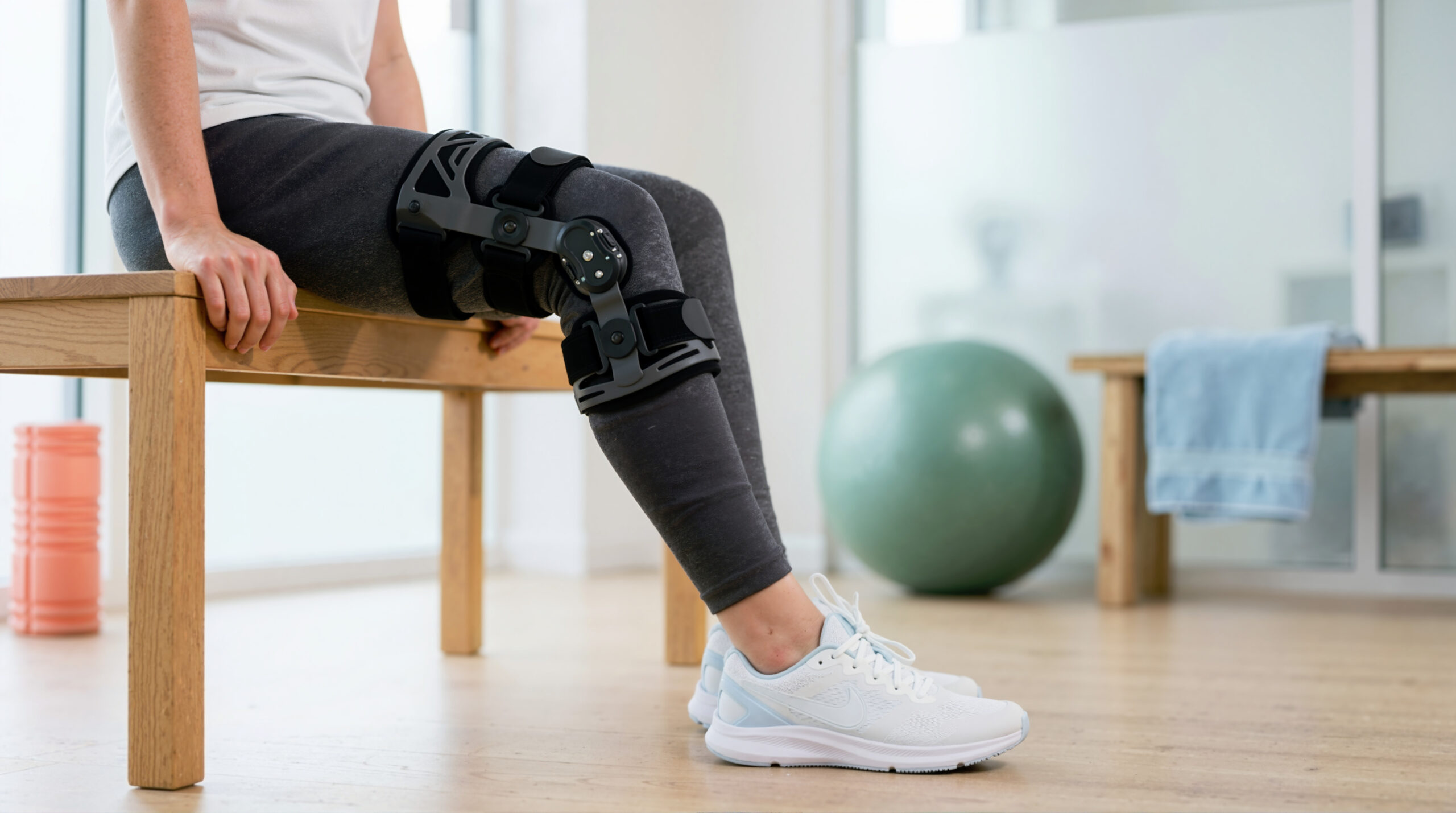
After the surgery, Michael’s journey to recovery began with postoperative physical therapy. The first few sessions focused on managing pain and reducing swelling. These are crucial steps to ensure a solid foundation for more intensive rehabilitation. His physical therapist guided Michael through the following treatments:
- Range of Motion Exercises: To gradually increase knee range of motion.
- Strengthening Exercises: Targeting the quadriceps, hamstrings, and calf muscles to support knee stability.
- Swelling and Pain Management: Using compression and elevation to reduce swelling and pain.
- Manual Therapy: Soft tissue massage and joint mobilizations improve joint function and decrease pain.
- Gait Training: To improve walking patterns and ensure proper weight distribution and knee alignment.
- Balance and Proprioception Training: Exercises that help restore balance and knee joint position are crucial for preventing re-injury.
- Functional Training: Focused on returning to daily activities and specific sports or hobbies with proper form and without pain.
One of the pivotal aspects of Michael’s postoperative care was the personalized attention he received. His therapist continuously adjusted his plan based on his progress, ensuring each exercise was challenging and achievable. This customization was crucial, as it kept Michael motivated and engaged in his recovery, even on days when progress seemed slow.
Postoperative therapy also included education on proper movement patterns to prevent future injuries and ensure the longevity of his knee’s health. Michael learned how to adjust his daily activities to protect his knee and support its healing.
The Impact of Comprehensive Physical Therapy
The benefits of Michael’s commitment to both pre-and postoperative physical therapy were clear; not only did his recovery timeline exceed expectations, but he also experienced a significant improvement in his knee’s functionality compared to before the surgery.
Michael’s dedication to his therapy and his therapist’s expertise transformed his recovery into a journey of personal growth and resilience. The knowledge he gained about injury prevention and physical wellness became integral to his daily life, influencing his return to hiking and his approach to physical activity in general.
A Return to the Trails
After his rehab ended, Michael stood at the base of his favorite hiking trail, ready to tackle it again. This moment was the culmination of hours of physical therapy, perseverance, and the unwavering support of his therapist. As he ascended the trail, each step was a testament to the importance of comprehensive physical therapy in recovery from surgery.
Michael’s experience underscores the transformative potential of pre- and postoperative physical therapy at Michigan Orthopedic Center. By engaging in targeted exercises before and after surgery, patients can accelerate their recovery and improve their overall physical function and quality of life!
Sources: https://journals.sagepub.com/doi/10.1177/0269215510380830, https://www.ncbi.nlm.nih.gov/pmc/articles/PMC7146095/

Physical Therapy vs. Surgery: A Non-Invasive Approach to Meniscus Tears
Physical therapy offers a promising alternative to surgery for managing meniscus tears, especially for those cases where the tear is mild to moderate or when the patient’s lifestyle does not demand aggressive physical activity.
At Michigan Orthopedic Center, our approach is grounded in the body’s natural healing ability, emphasizing pain management, improved mobility, and strengthening of the knee joint and surrounding muscles.
Here’s why our programs can be a better option for individuals with meniscus tears:
- Non-Invasive: Physical therapy is a non-invasive treatment that eliminates risks associated with surgical procedures, such as infections, complications, and the potential for anesthesia-related issues. You can avoid the risks and stress of undergoing surgery with our programs.
- Pain and Swelling Reduction: Physical therapy techniques effectively manage pain and reduce swelling, which are key components of the recovery process.
- Improved Mobility and Strength: Our tailored treatments focus on restoring range of motion and strengthening the muscles around the knee. This not only aids in the healing of the meniscus tear but also contributes to the overall stability and functionality of the knee, potentially preventing future injuries.
- Cost-Effective: Physical therapy is often more cost-effective than surgery. It eliminates the expenses associated with the surgical procedure itself and post-operative care.
- Promotes Long-Term Knee Health and Prevention: Beyond immediate recovery, physical therapy educates patients on proper knee care and exercises that support long-term joint health. This preventive aspect helps avoid further injuries and can improve overall physical fitness.
For many individuals with meniscus tears, physical therapy at Michigan Orthopedic Center offers an alternative to surgery. Our approach addresses the immediate injury and promotes long-term knee health without the risks and costs associated with surgery!
Sources: https://evidence.nejm.org/doi/full/10.1056/EVIDoa2100038, https://pubmed.ncbi.nlm.nih.gov/23506518/

Take the Next Step Toward a Stronger Recovery
Facing orthopedic surgery or a sudden injury can make your daily routines feel daunting, but you don’t have to navigate it alone. At Michigan Orthopedic Center, we offer comprehensive, personalized pre- and postoperative physical therapy to help you achieve the best possible outcome. From building vital strength before your procedure to guiding your dedicated, hands-on rehabilitation afterward, we have you covered.
Exercise of the Month
DOUBLE KNEES TO CHEST
(Lower Back, Hips)
Start on your back with your knees bent. Slowly bring both knees to your chest. Grasp your knees. Hold for 30 seconds and repeat. 1 Set, 3 Reps.
Recovery In Lansing, Okemos, And Mid-Michigan
See How Patients Have Recovered In Lansing & Okemos
We’ve helped thousands of people in Lansing, Okemos, and the surrounding Mid-Michigan region return to the life they love. From everyday walkers to elite athletes, our patients’ stories are proof that with the right care and support, healing is possible.

-
“I have never been made to feel like I am just a number.”
Dr. Meredith Heisey recently replaced my left shoulder, she has also repaired both rotator cuffs, and put my wrist back together after a fall while I out of the country. Dr. Heisey does not sugar coat the situation, she tells it like it is and I admire her for that. She and her team are…
–
JANICE K GEARHART
-
“It was a great experience.”
Two weeks ago today I had my right knee completely replaced by Dr. Taunt. He is simply the best. Yes I do have some swelling and stiffness but how many can say that they are at 116 degrees of flex at this stage. In regards to the staff at McLaren , everyone was professional and…
–
TOM N.
-
“I am grateful to be walking again!”
I am very grateful to Dr. Swords. After a traumatic fall from a ladder where I broke my knee in 3 pieces, Dr. Swords excellent work allowed me to walk in 4 months. I was able to get back to work in only four months after surgery. Today I am thankful for the magnificent care…
–
M.S.L.

Patient engagement platforms: ‘The way of the future’
Key takeaways:
- Patient engagement platforms may help patients stay connected and engaged in their care.
- Access to these platforms may be problematic for some patients.
According to the Center for Health Care Strategies, nine out of 10 adults struggle with health literacy in the United States.
Published literature has shown the level of a patient’s personal health literacy — defined by the CDC as “the degree to which individuals have the ability to find, understand, and use information and services to inform health-related decisions and actions for themselves and others” — may impact patient-reported outcomes, with limited health literacy associated with poor results.
In an editorial published in The Journal of Bone and Joint Surgery in 2024, Zachary C. Lum, DO, and colleagues wrote that “by using plain language and presenting information in clear, digestible chunks, orthopedic surgeons can foster better patient comprehension, which directly improves treatment adherence and patient outcomes.” The authors also highlighted that the use of visual aids can “improve patients’ understanding of their condition and enable them to make more informed decisions regarding complex treatment options.”
When it comes to total joint arthroplasty, patients are traditionally provided a booklet that relays information on preoperative and postoperative care and what the patient should expect from surgery, according to Chip Taunt, DO, orthopedic surgeon at Michigan Orthopedic Center. However, he said this system can be inefficient, as the booklets can be costly and need to be reprinted whenever a change is made.
“The other thing is not many people consume their information anymore by reading something that is in print,” Taunt told Healio. “In fact, most of them do not, and they also do not finish it because they get distracted by their phone.”
Sources who spoke with Healio said digital patient engagement platforms have begun to replace the paper model by providing patients with bite-sized pieces of information related to their care directly to their phone.
“A patient engagement platform is one that helps fill in the gaps,” Scott Laster, CEO of MiCare Path, said. “It is something that can help keep a patient feeling connected, communicated with and guided in between the physical touch points that happen with either outpatient medical groups or hospital systems, whichever groups ultimately manage that care.”
Patient engagement platforms
According to Jeremy M. Gililland, MD, there are a variety of patient engagement platforms, with the simplest form being a tool that reminds physicians to call patients on a regular basis.
“There were some early platforms that helped us call our patients on a regular basis and there were some call centers that would do that,” Gililland, professor of orthopedic surgery at the University of Utah, told Healio.
But he said patient engagement platforms have evolved, with some linked through electronic medical records.
Other forms of patient engagement platforms include apps that patients can download, a portal that can be accessed on the computer or a text message program, according to Kevin J. Campbell, MD, orthopedic surgeon at Orthopedic & Sports Institute of the Fox Valley in Appleton, Wisconsin, and CEO of STREAMD.
Chatbots and AI have also begun to be incorporated in these programs, which Christopher L. Peters, MD, said helps “with more nuanced responses to patient questions.”
“We are starting to see AI introduced into the marketplace, which a lot of times now makes the response back to the patient feel more personalized and tailored to their individual situation,” Peters, professor of orthopedic surgery at the University of Utah, said. “That, undoubtedly, is only going to get better as the AI pieces get better.”
In addition to text, videos can be sent through these platforms, providing another personalized experience for the patient, according to Taunt.
“The challenge is the physician has to be comfortable making a video,” Taunt said. “It took me a while to get comfortable making a video that a patient is going to watch, but then they show it to their friends, neighbors and people at physical therapy. It is extra work, but there might be a bit of a marketing piece there for the physician, too, if you do a good job with this and you stand out. You are doing something that is not average.”
Stay connected
When utilizing patient engagement platforms in practice, Peters said the main benefit is that it delivers “real-time information at the right time.” According to Peters, many platforms engage patients during the preoperative period by communicating surgeon preferences for prehabilitation, hydration before surgery, activity modifications and early physical therapy direction.
“The patient benefits from these platforms as it serves as an extension of the provider or the practice itself,” Peters told Healio. “The patient feels substantially more touch points from the practice or the provider than they would have without these platforms being in effect.”
Gililland said the directions and reminders provided by patient engagement platforms help keep patients compliant before and after surgery.
Patients also seem to absorb the information better and learn more, according to Taunt.
“The doctor wants the patient to have all the information and the patients want all the information, but they do not realize that the way we gave them information in the past does not work for the way people consume their information anymore,” Taunt said. “We have to try to give it to them in a way that fits modern learning better.”
Because many patients have similar postoperative experiences, Taunt said platforms can be used to address possible concerns before they occur.
“If on postoperative day 7 people call all the time worried about how bruised their leg is, we send them a message on postoperative day 6 that says, ‘If not today, soon you are going to have a lot of bruising on your leg, and it is totally normal. It is going to start going away a day later and it is slowly going to get better every day until 14 days after surgery it will be almost totally gone,’” he said. “We are preempting their call by giving them the reassurance in advance.”
According to Laster, this reassurance can help patients feel a sense of connection, comfort and peace of mind.
“If you can tell patients what is going to happen before it happens then that may absolve some of the questions,” Laster told Healio. “The other piece is the comfortability that they have with someone they can reach out to on the other end of the line, whether it is an AI chatbot or a care coach or coordinator.”
Tailor to practice
Despite improving patient compliance and outcomes, Campbell said patient engagement platforms may create more work for physicians and staff, especially if patients can send secure messages to the physician team.
“The exchanging of secure messages with the physician or the physician’s team was not something people did 10 years ago. Now that that feature is available, patients are texting at very high rates. There is this entire workload that offices are having to manage that they never had to manage before,” Campbell told Healio. “The next version of the patient engagement platforms will have to focus on both the patient experience and the clinical staff experience.”
In addition, Peters said setting up the patient engagement platform alone can be cumbersome, as physicians should tailor the platform to their own practice to provide patients with information specific to their surgeon.
“The patient is going to get information about how you like to prepare them for surgery, how you are going to propose doing the surgery, your typical postoperative expectations or restrictions,” Peters said. “Those things vary from provider to provider and from practice to practice. Upfront, the work that the provider puts into tailoring the digitally communicated content becomes important.”
Use of a patient engagement platform may require adding full-time employees, depending on how much information a physician may want to collect from patients, Peters said. This includes both general patient information as well as more granular information, such as step counts, stride length and range of motion.
“You have to figure out where you want to be from a practice standpoint in terms of how much data you want to see, but everybody figures that out on their own,” he said.
Learning curve
Campbell also said patient engagement platforms have a learning curve both for the physician and the patient. According to sources who spoke with Healio, the type of patient engagement platform implemented in practice is important, as patients may find some types too hard to navigate.
“The simplest way to get patients the information that they need is probably the best,” Campbell said. “If that can come through a simple text message, that is fantastic. If it is gated behind an app or a portal that requires patients to take additional steps to access, that can make the usability of those programs less than something that is easy for them to consume.”
There is also the consideration that patients in certain socioeconomic areas may not have access to a smartphone or the internet, which alienates an entire patient population, according to Peters.
“We certainly could do better reaching out to those populations and trying to figure out how we can better communicate or include them in similar types of programs,” Peters said.
But one of the biggest concerns with implementing AI into patient engagement platforms involves the program being able to identify when a patient is having a real medical emergency, according to Gililland.
“At some point patients are going to be asking questions or interfacing with these services and there is a real patient problem that is presenting. Someone is infected or someone has a fracture and they may be interfacing with an application. There is concern on some practitioners’ part about saying, ‘I do not want to miss one of those problems,’ and, certainly, an application could miss something that maybe problematic,” Gililland said.
Cost benefit
Published research on some patient engagement platforms has documented reductions in ED visits, readmissions, office phone calls and opioid utilization, all of which carry cost implications in both fee-for-service and bundled payment models. However, broader multicenter validation of these findings is still needed to fully characterize the cost-benefit equation across diverse practice settings.
“There are some platforms that are elaborate and probably cost more, and there are others that are quite simple,” Gililland said. “The one we use is a fairly simple system and it certainly costs our clinic some money to use the program, but the reality is it dramatically limits the number of phone calls to our staff because the patients will interface with the system and it answers a lot of the regular questions that would normally be a burden to staff.”
By reducing the number of phone calls, Gililland said surgeons may be able to decrease the number of staff, while Taunt said these platforms may allow physicians and staff to use their time more efficiently.
“If you were to think of it in terms of if your time is finite and if your team is spending 30 minutes a day answering questions, that cuts down to 2 minutes, and you can get them to use that other 28 minutes to see another patient in the clinic or to do one more surgery or one surgery a week because you save 2.5 hours of staff time a week, then I think there is a financial benefit to using your time more efficiently,” Taunt said. “There is a benefit from the physician and physician assistant side of decreasing the stuff that bogs down your day and getting you done a little bit earlier.”
Way of the future
As the use of patient engagement platforms continues to grow, Peters said more research needs to be done on whether these platforms provide value to practices and patients.
“Our center has done some work on whether these platforms provide value. I would like to see more work from other centers that verifies that is the case,” Peters said. “My suspicion is that most practices will see what we have seen in terms of reduction in personnel needed to manage the volume of patient touches that we see with a typical outpatient joint replacement. A little bit more work on the value equation would be beneficial.”
In addition to whether these platforms provide value, Campbell said it is important to identify what patients value most.
“Are they interested in just getting the right information at the right time? Or is it something where they may prefer getting delayed information but from a human staff member,” Campbell said.
Taunt also said more research needs to confirm whether patient engagement platforms improve patient satisfaction and patient outcomes, as most evidence currently is anecdotal.
“Can we help people do better? Can we decrease complication rates? Can we improve somebody’s range of motion? Can we improve the rate that they gain their strength? Can we improve the patient’s outcome by using these tools? I am not aware of any published, peer-reviewed, controlled literature that provides that,” Taunt said.
Despite the lingering, unanswered questions, Campbell said he believes the use of patient engagement platforms will continue to grow in the future and be “as popular or as ubiquitous as physician websites.”
“I personally think every orthopedic surgeon is going to have some digital clinical assistant that patients can interact with as an alternative to interacting with staff members because maybe 70% of their questions are answered by the digital assistant before going to the clinical staff. That is the way of the future,” Campbell said.
Article by Casey Tingle
Fact checked by Mindy Valcarcel, MS
Source: https://www.healio.com/news/orthopedics/20260512/patient-engagement-platforms-the-way-of-the-future
Elite Care for Hip and Knee Pain or Injuries
ABOUT DR. MESKO
Dr. Mesko is a fellowship trained orthopaedic surgeon who returns to his hometown. He completed residency at the Cleveland Clinic and furthered pursued his interest in hip and knee adult reconstructive surgery with a fellowship at RUSH University Medical Center. He trained with many of the leading innovators in minimally invasive techniques, anterior hip replacement, outpatient surgery and complex revision arthroplasty surgery. He also has expertise in robotic assisted hip and knee replacement surgery. Dr. Mesko values engaging patients in education and active dialogue. Through shared decision making, he partners with patients to customize treatment plans that position them for optimal return to their desired lifestyle.
DANIEL R. MESKO, DO IS A LANSING-AREA NATIVE WHO HAS HAD THE
FOLLOWING TRAINING:
- Adult Reconstructive Hip and Knee Fellowship, RUSH University Medical Center, Chicago, Illinois
- Orthopedic Surgery Internship & Residency, Cleveland Clinic, Cleveland, Ohio
- Doctor of Osteopathic Medicine, Michigan State University College of Osteopathic Medicine, East Lansing, Michigan
- BS – Applied Health Sciences, Wheaton College, Wheaton, Illinois
ACADEMIC APPOINTMENTS, CERTIFICATIONS
- Board Certified, American Board of Orthopaedic Surgery, 2021
- Clinical Assistant Professor, Michigan State University College of Osteopathic Medicine
- Faculty, McLaren Greater Lansing Orthopedic Surgery Residency Program
AWARDS AND PUBLICATIONS
- Scored in the top 10% nationwide on medical boards
- Walter C. Mill Award for Excellence in Surgery (2012)
- Publications in the areas of unicompartmental knee arthroplasty, hip instability as well as prosthetic joint infection prevention/treatment
MEMBERSHIPS
- Fellow – American Association of Hip and Knee Surgeons (AAHKS)
- Fellow – American Academy of Orthopaedic Surgeons (AAOS)
- Michigan Orthopaedic Society
HOSPITAL AFFILIATIONS
OTHER INTERESTS
- Medical Mission trips including trips to Kenya, Peru and Nicaragua
- Ironman Triathlons, Soccer, Skiing, Fishing

Crispy Black Bean Tacos with Cilantro Lime Sauce
These vegetarian tacos have a deliciously satisfying black bean filling with fresh salsa and seasonings all tucked into a golden crispy tortilla and served alongside a cool and creamy cilantro lime sauce.



Ingredients
Crispy Black Bean Tacos
- 1 (14-ounce) can of black beans, rinsed and drained
- 1/4 cup salsa
- 1 tablespoon taco seasoning
- 6–8 small flour tortillas
- 1/4 – 1/2 cup olive oil or butter for frying
Cilantro Lime Sauce
- 1/4 cup avocado oil
- 1/4 cup water
- 1/2 cup chopped green onions
- 1/2 cup cilantro leaves
- 2 cloves garlic
- 1/2 teaspoon salt
- Juice of 2 limes
- 1/2 cup sour cream (sub avocado to keep it dairy-free/vegan)
Instructions
Step 1: Make Sauce. Blend all ingredients for the cilantro lime sauce until smooth. Set aside.
Step 2: Make Filling. In a food processor or chopper, blend the beans, salsa, and taco seasoning. Transfer to a skillet with a drizzle of oil and cook long enough to soften the flavors of the garlic and/or onions in the salsa, about 5 minutes.
Step 3: Fill Tacos. Spread a few tablespoons of the black bean filling into a flour tortilla. Fold in half. Repeat until the filling is used up (about 6-8 tacos).
Step 4: Cook Tacos. Heat oil or butter in a skillet over medium heat. Fry the tacos over medium heat until crispy and golden brown. Dip in cilantro lime sauce and serve with chips and salsa.