Your wrist connects every hand movement to the rest of your arm. When a ligament in the wrist is torn, even simple tasks like gripping a cup or typing can become painful or impossible. Wrist ligament repair is a common surgical procedure that helps restore stability, reduce pain, and restore function after this type of injury.
If you’re considering this type of surgery or just want to understand it better, the team at Michigan Orthopedic Center is here to help! Let’s look at some of the most commonly asked questions about wrist ligament repair surgery.
Answering Your Wrist Ligament Surgery Questions
What exactly happens when a wrist ligament is torn?
Ligaments are strong bands of tissue that connect bones and keep joints stable. In the wrist, they help maintain alignment between the small bones and support smooth motion.
A torn ligament usually results from a fall onto an outstretched hand, a twist during sports, or a forceful impact. Symptoms often include swelling, reduced grip strength, instability, and pain with movement. In some cases, the wrist may even feel like it is “giving out” during use.
When does a torn wrist ligament need surgery?
We typically recommend wrist ligament repair when the injury is too severe to heal with bracing, rest, or therapy alone. Surgical reconstruction is necessary if the ligament is completely torn or the wrist remains unstable after initial care.
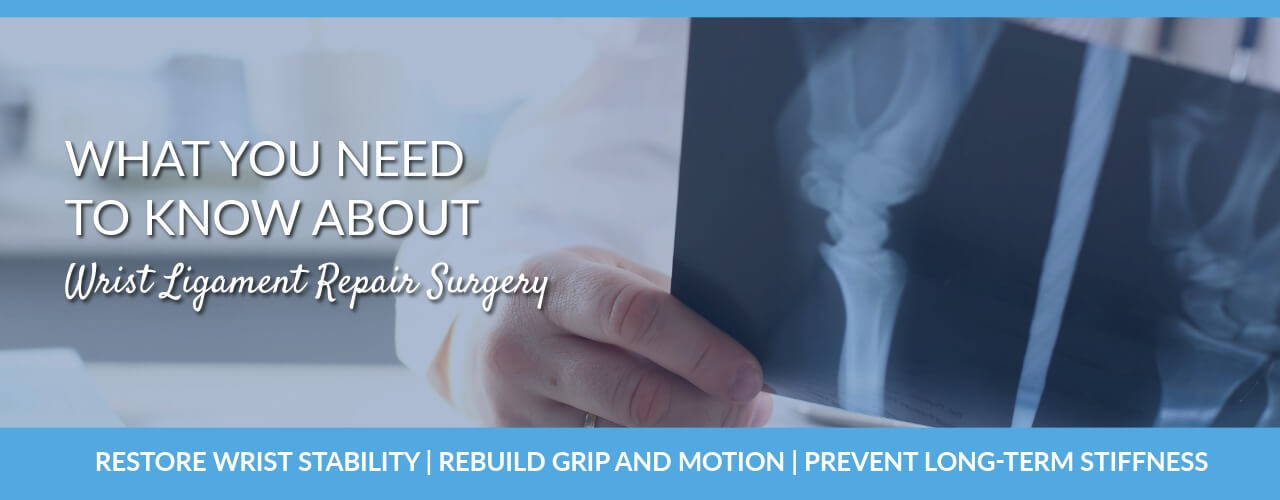
At Michigan Orthopedic Center, we evaluate each patient’s wrist function using advanced imaging and targeted physical exams. If we find significant damage or a long-term risk of arthritis, we’ll walk you through the benefits of repair surgery and what to expect from recovery.
What can I expect during wrist ligament surgery?
Wrist ligament repair is typically done as an outpatient procedure, meaning you can return home the same day. Depending on the type and location of the tear, your surgeon may use minimally invasive arthroscopy or an open surgical technique to access and repair the damaged tissue.
The ligament is reattached to the bone during surgery using sutures or small anchors. In some cases, a graft from nearby tissue is used to reconstruct the ligament if the original is too damaged. The goal is to restore the natural alignment and stability of the wrist so it can heal properly.
How soon can I use my hand again after surgery?
The recovery timeline varies depending on the injury, the specific procedure performed, and how well your body heals. Our occupational therapists will guide you through a structured rehabilitation to help restore fine motor skills.
Initially, we’ll place your wrist in a splint or cast to protect the repair. Most patients wear this support for several weeks.
You’ll then start rehabilitation with very limited hand use, especially during the first month. Once your surgeon clears you, therapy shifts to improving your range of motion and strengthening the muscles that support your wrist. Activities like driving, typing, or lifting will gradually return as you hit rehab milestones.
It’s important not to rush. Healing tissue needs time to regain strength and mobility.
What kind of results can I expect from wrist ligament repair?
Most patients recover strong, stable wrist function after surgery, especially when closely following their recovery plan. Over time, movements like lifting, pushing, gripping, and typing become easier and more comfortable.
Some people may notice mild stiffness with high-demand activities, but significant pain or instability usually improves or resolves completely. Athletes, manual workers, and active individuals often return to full participation after a structured rehab process.
Let Michigan Orthopedic Center Help You Heal With Confidence
If wrist pain or instability is limiting your daily life, our team is ready to help. We offer advanced diagnostics, expert surgical care, and personalized recovery plans that support healing at every step.
Contact one of our Lansing, MI, and Okemos, MI clinics today to schedule an evaluation and find out whether wrist ligament repair is the right solution for your needs.