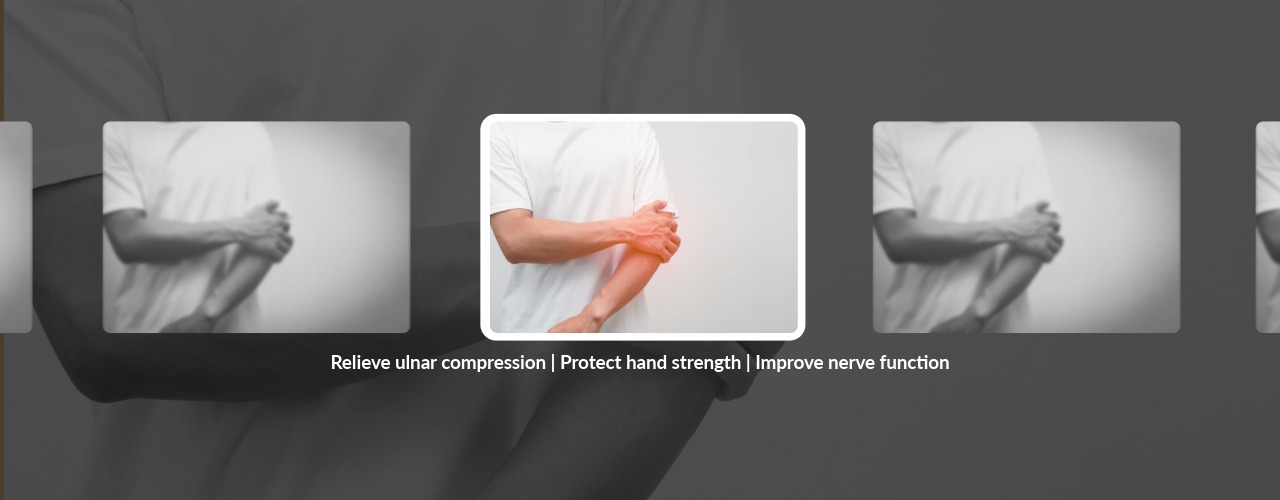
Cubital tunnel surgery is an operation that relieves pressure on the ulnar nerve near the elbow. It may be considered when nerve compression causes lasting numbness, tingling, weakness, or loss of hand function that has not improved with nonsurgical care.
Cubital tunnel surgery at Michigan Orthopedic Center is performed by an orthopedic surgical team that understands what ulnar nerve compression costs you in daily function. Schedule your consultation today.
What Cubital Tunnel Syndrome Actually Is
The ulnar nerve travels from the neck into the arm and hand. At the elbow, it passes through a narrow area called the cubital tunnel.
Pressure or stretching around this area can irritate the nerve. You may feel tingling or numbness in the ring and small fingers. Some people also notice hand weakness or trouble controlling their fingers.
Symptoms can become more noticeable when the elbow stays bent. Leaning directly on the elbow may also trigger a sharp, electric feeling that travels toward the hand.
Why Cubital Tunnel Surgery Becomes the Right Answer
Surgery is usually considered after simpler treatments have not provided enough relief. Early care may include changing activities, avoiding prolonged elbow pressure, using a brace or splint, and taking appropriate medications for symptoms.
An orthopedic surgeon may discuss cubital tunnel surgery when numbness becomes persistent, weakness develops, or hand muscles begin to lose size. Worsening nerve function can also make surgery a more important option.
The goal is to reduce pressure on the ulnar nerve before nerve problems cause further loss of hand function.
What Living With Untreated Cubital Tunnel Syndrome Feels Like
Ulnar nerve compression can affect much more than sensation. The nerve helps control several muscles needed for precise hand and finger movements.
Everyday tasks may become harder. A person may struggle to hold a coffee mug, turn a key, type comfortably, button clothing, or keep a firm grip on an object.
Long periods at a desk can also bring on symptoms if the elbow stays bent. Resting the elbow on a hard surface may send the familiar electric shock feeling into the ring and small fingers.
What Patients Can Do While Considering Cubital Tunnel Surgery
Start by paying attention to which positions and activities bring on symptoms. Avoid leaning directly on the affected elbow when possible. Changing how you sleep or work may also reduce stress on the nerve.
A surgical consultation is a good time to ask specific questions. You may want to ask what is causing the nerve pressure, how severe the nerve problem appears, which procedure is being considered, and what recovery may involve.
Bring information about treatments you have already tried. Tell your surgeon if numbness, weakness, or hand control has changed.
What an Evaluation at Michigan Orthopedic Center Looks For
Before recommending an operation, an orthopedic surgeon looks at how well the ulnar nerve is working. Your symptoms and physical exam help show how the condition is affecting your hand and arm.
The evaluation may include checking:
- Sensation in the ring and small fingers
- Strength and control of the hand and fingers
- Signs that hand muscles have become smaller or weaker
- Changes in symptoms when the elbow bends or pressure is placed near the nerve
Your surgeon will also consider how long symptoms have been present and whether they are getting worse. Nerve testing may be used when more information about nerve function is needed.
How Cubital Tunnel Surgery Restores Hand and Arm Function
There are different surgical ways to relieve pressure on the ulnar nerve. The procedure chosen depends on the location of the compression, the condition of the nerve, and other findings from your evaluation.
In some cases, the surgeon releases tissue around the nerve to give it more room. In other cases, the nerve may be moved to a new position where it is less likely to become stretched or compressed.
The purpose of cubital tunnel surgery is to protect nerve function and create better conditions for recovery. Improvements may include less tingling and numbness, better grip control, and greater ease with tasks that depend on the hand.
Nerves can recover slowly, especially when compression has been severe or present for a long time. Some patients may also need rehabilitation after surgery to safely regain arm movement, strength, and hand function.
Ready to Take Your First Step?
An orthopedic consultation can help determine why your ulnar nerve is irritated and how much it is affecting your hand. Your surgeon can review your symptoms, examine your arm, discuss previous treatments, and explain which options fit your condition.
Numbness and weakness from ulnar nerve compression do not have to keep limiting what your arm can do. Contact Michigan Orthopedic Center to learn whether surgery may be an appropriate next step and to schedule your consultation.