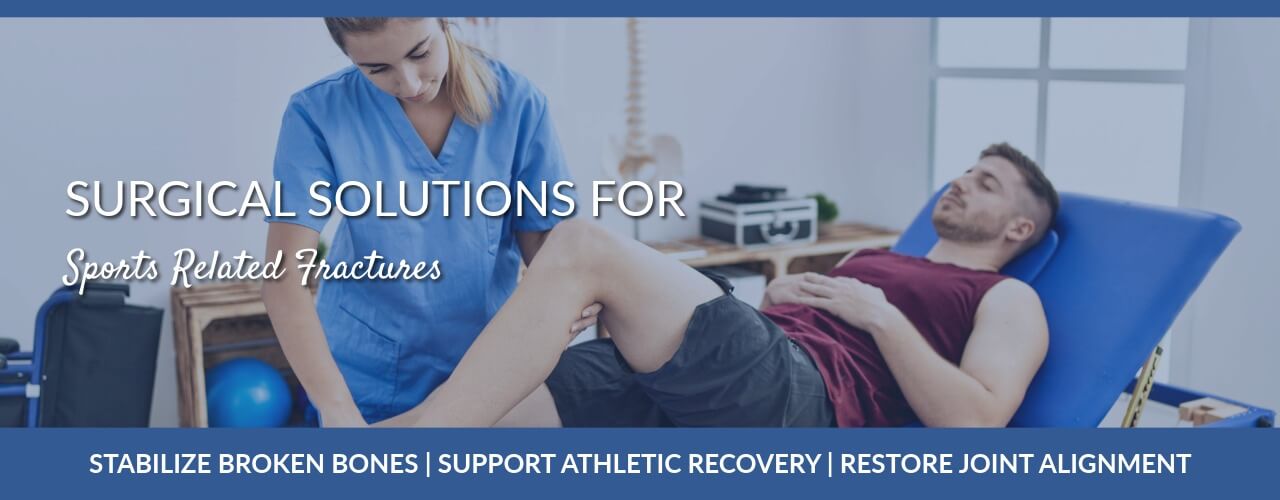
Sports can push the body to its limits. But what happens when you push your body past its limits? A hard fall, bad landing, or unexpected collision can lead to a broken bone that needs more than a cast. When alignment, stability, or healing is at risk, sports injury fracture surgery may be the next step.
At Michigan Orthopedic Center, our orthopedic surgeons offer proven surgical solutions to support bone healing and get athletes back on the move. Here’s what you need to know about the most common fractures and the procedures used to treat them.
What Types of Fractures Are Common in Athletes?
Sports injuries don’t just cause sprains or bruises. Bone breaks happen often, especially in high-impact or contact activities. Some common fractures include:
- Clavicle fractures, which are frequent in football, cycling, and contact sports
- Wrist fractures, which are caused by falls or collisions
- Ankle fractures, which occur while twisting, jumping, or landing unevenly
- Tibia or fibula fractures, which are lower leg breaks from direct impact or stress
- Stress fractures, which are overuse injuries that can turn into full fractures if untreated
When Surgery Becomes Part of the Game Plan
Not every broken bone needs surgery, and many can heal with casting or other interventions. But in certain cases, it’s the best choice for long-term recovery. You might need sports injury fracture surgery if:
- The bone is displaced or fractured into multiple pieces
- A joint is involved, risking long-term stiffness or instability
- Casting or bracing won’t hold the bone in a good position
- You’ve had poor healing from a previous injury
What Surgical Options Are Available for Bone Fractures?
Our orthopedic surgeons understand the urgency of recovery for athletes. For this reason, we’ll work closely with you to identify the best techniques to support healing and help you return to your sport safely and confidently. Here are some options:
Plate Fixation
Plate fixation uses small metal plates and screws to stabilize fractured bones. The hardware holds the pieces together while the bone heals.
The technique is strong and reliable. It allows for early movement, which is especially important in sports that require coordination and range of motion. In many cases, the hardware remains in place permanently.
When Do We Use It?
- Collarbone fractures
- Ankle fractures
- Forearm injuries
Intramedullary Nailing
For long bone fractures, like the femur or tibia, we may recommend intramedullary nailing. This procedure involves inserting a rod into the center of the bone to maintain alignment.
This method of sports injury fracture surgery provides strong internal support and can allow athletes to bear weight sooner than they would with casting alone.
When Do We Use It?
- Tibial shaft fractures
- Femoral fractures
- Fractures with minimal damage near joints
Pinning and External Fixation
Some fractures are best treated with small pins, wires, or an external fixator. These tools hold the bone in place without large incisions.
External fixation may be temporary or used for the entire healing process. It allows access to the skin and soft tissue while the bone sets correctly.
When Do We Use It?
- Wrist or hand fractures
- Certain types of ankle injuries
- Emergency stabilization when swelling is high
Helping You Get Back in the Game
At Michigan Orthopedic Center, we treat fractures with one goal: helping athletes heal strong and stay active. Our team offers expert care for broken bones with fast access to imaging, advanced surgical tools, and personalized recovery plans.
Our orthopedic surgeons use imaging and clinical evaluation to create a surgical plan that matches your sport, body, and lifestyle. Whether you’re aiming for a fast return to competition or looking to stay active without limitations, there’s a path forward.
If you’ve had a sports-related fracture, don’t wait. Schedule an evaluation and learn more about your surgical options for safe, lasting recovery.