For many baseball pitchers and other throwing athletes, elbow pain can put careers on hold. While it can have several causes, one of the more serious is damage to the ulnar ligament. In cases where conservative care (like physical therapy) doesn’t resolve your symptoms, it may be time to consider ulnar collateral ligament surgery–more popularly known as “Tommy John surgery.”
This is one of the many surgeries we provide at Michigan Orthopedic Center. Today, we want to answer frequently asked questions so you can know what to expect.
Common Questions About Tommy John Surgery
What is the ulnar collateral ligament, and why does it matter for throwing athletes?
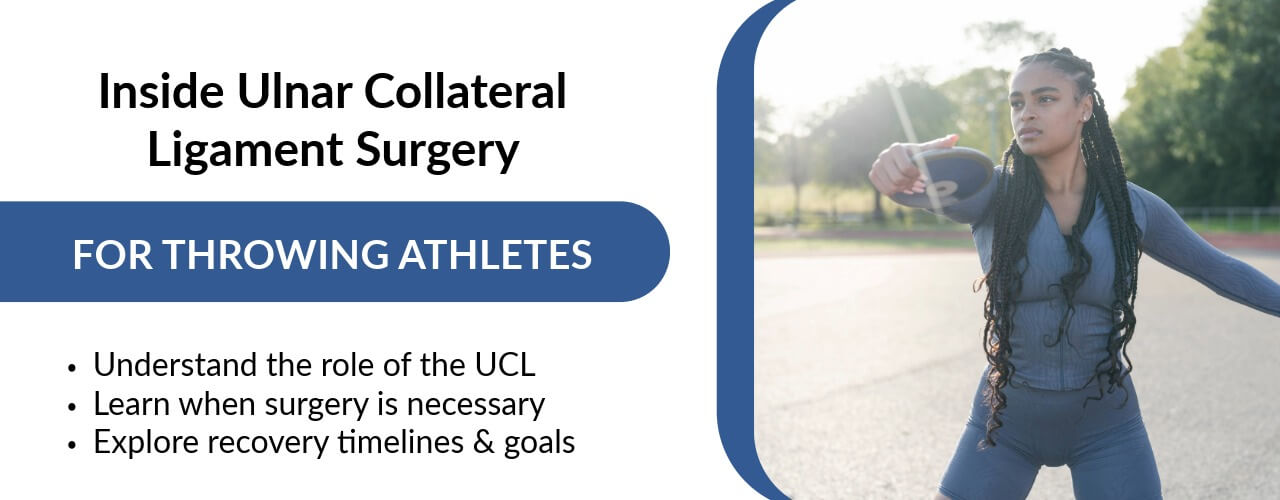
The ulnar collateral ligament (UCL) is a band of tissue on the inside of the elbow that stabilizes the joint during throwing motions. In pitchers, the repetitive stress of overhead throwing can cause the UCL to stretch or tear. The elbow can feel unstable and painful without a strong UCL, making high-level throwing nearly impossible.
In fact, ulnar collateral ligament surgery is called “Tommy John” surgery because it was first performed on baseball pitcher Tommy Johnson in the 1970s!
How do I know if I need ulnar collateral ligament surgery?
Not every athlete with elbow pain needs surgery. Many players improve with rest, physical therapy, and activity modification. At Michigan Orthopedic Center, our orthopedic surgeons usually only recommend surgery if the ligament is fully torn, if pain continues despite non-surgical treatment, or if you cannot throw effectively. We use advanced imaging and physical exams to determine if surgery is the right choice.
What actually happens during the surgery?
The surgery involves either repairing or replacing the damaged ligament with a tendon graft, often taken from the forearm, hamstring, or sometimes a donor. The new graft functions like the original ligament, restoring stability to the elbow.
The surgery is typically done using small incisions, and the entire procedure lasts about 60 to 90 minutes.
How long does recovery take after surgery?
Recovery is a long but structured process. Athletes generally rehabilitate with our physical therapists for 12 to 18 months before returning to competitive throwing.
The early weeks focus on gentle motion and protecting the graft. Over time, physical therapy builds strength in the forearm, shoulder, and core to support proper throwing mechanics. The final stage includes a throwing progression to safely return to competition.
Most throwing athletes who undergo ulnar collateral ligament surgery can return to play at or near their previous level. Your outcome depends on factors like the extent of injury, dedication to rehabilitation, and overall health.
What risks are associated with ulnar collateral ligament surgery?
The procedure is considered safe and has helped thousands of athletes return to competition. However, like any surgery, there are risks such as infection, nerve irritation, or stiffness in the elbow.
Following your surgeon’s post-op instructions closely reduces these risks, as does working with a physical therapist afterward.
Can younger athletes benefit from surgery?
Yes, but the decision is more careful. Younger athletes, especially teenagers, are usually explored first with non-surgical options since their bones and growth plates may still be developing. If surgery is necessary, it is tailored to protect long-term elbow health while still giving young athletes a chance to return to their sport.
What should I expect when choosing Michigan Orthopedic Center for care?
You’ll receive comprehensive care from diagnosis through recovery. Our orthopedic surgeons collaborate with physical therapists to help guide you through the entire process, from surgery to customized rehab, with the shared goal of getting you back in the game.
Contact Us Today To Learn More
If elbow pain is keeping you from throwing at your best, the right care can make all the difference. Contact Michigan Orthopedic Center today to schedule a consultation and learn whether ulnar collateral ligament surgery is right for you. Our team is here to provide the support, expertise, and guidance you need for a successful return to play.