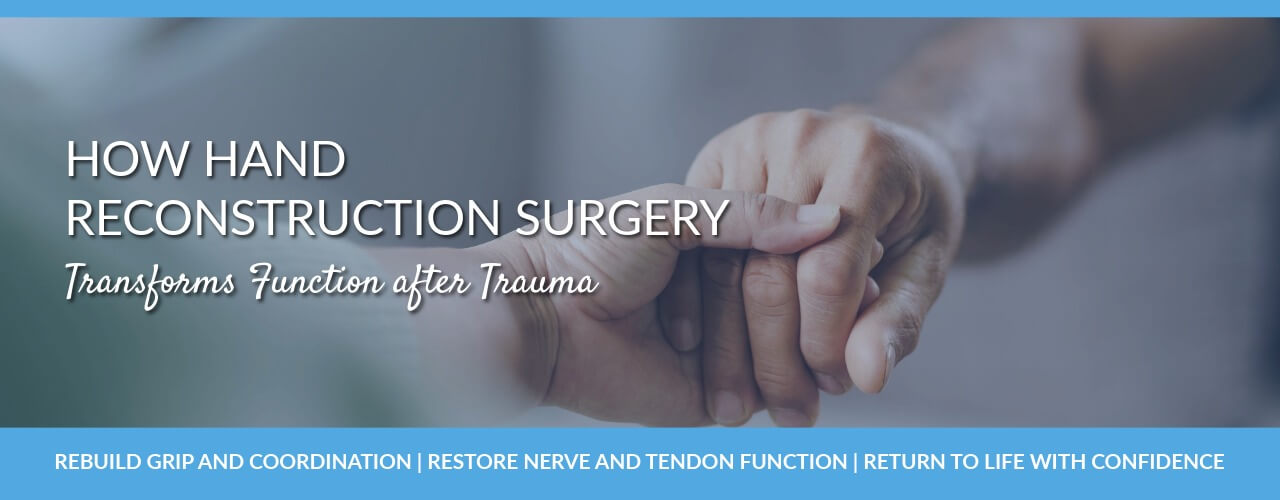
When trauma affects the hand, even the smallest injury can dramatically alter daily life. From gripping a coffee mug to buttoning a shirt, we rely on the complex structures of our hands more than we realize. For patients facing severe injury, hand reconstruction surgery can play a major role in restoring fine motor skills, daily independence, and overall confidence.
Today, we want to share a success story from one of the Michigan Orthopedic Center patients, a mechanic in his early forties whom we’ll call Andrew. He came to us after he suffered a devastating hand injury. Here’s how the combination of surgery and rehabilitation made a life-changing difference.
A Devastating Accident That Changed Everything
Andrew had always loved working with his hands. While repairing heavy equipment one morning, his right hand was caught in a hydraulic press. The crushing injury left him with multiple fractures, nerve damage, and torn ligaments.
In an instant, the hand he relied on for his career and daily activities was rendered nearly useless.
The injuries left Andrew with constant pain and swelling. He couldn’t hold tools, drive comfortably, or perform basic self-care tasks without assistance. The thought of never regaining function left him frustrated and anxious about the future.
We explained that the best path forward would be hand reconstruction surgery, a procedure designed to repair both structural and functional damage. However, we explained that for the best outcomes, he would need to follow through with extensive post-surgical rehabilitation.
The Surgical Plan: Restoring Form and Function
Because of the severity of the injury, Andrew’s surgery required a multi-step approach. Our orthopedic surgeons reconstructed fractured bones with internal fixation, repaired torn tendons, and performed delicate microsurgery to reconnect damaged nerves and blood vessels. While these procedures did help repair his hand’s appearance, the main goal was to restore movement, dexterity, and sensation.
The surgical team emphasized that recovery would not be immediate. Instead, it would require patience, multiple follow-up procedures, and a carefully structured rehabilitation program. Still, this personalized plan gave Andrew hope that he could return to the activities he once loved.
Why Recovery Doesn’t Stop in the Operating Room
While the surgery itself was a significant milestone, the real transformation began in the following months. Post-surgical rehabilitation was crucial to regaining strength, mobility, and coordination. Andrew worked closely with our physical therapists to rebuild function step by step.
Early exercises focused on reducing swelling, improving circulation, and gently mobilizing the fingers to prevent stiffness. Over time, therapy progressed to grip-strengthening drills, fine motor coordination tasks, and job-specific activities that mimicked his work as a mechanic. We also provided him with adaptive tools to help him use his hand during the healing process, gradually transitioning back to regular tools as his strength improved.
This combination of surgical expertise and rehabilitation ensured that the repaired structures healed properly and that Andrew relearned how to use his hand effectively.
Overcoming Obstacles and Regaining Independence
Recovery wasn’t without setbacks. Andrew faced moments of discouragement when progress felt slow or when pain limited his therapy sessions. However, consistent support from his care team at Michigan Orthopedic Center helped him stay motivated. He celebrated small victories, like holding a fork again, before working toward bigger milestones, such as gripping a wrench or tightening bolts at work.
Within a year, Andrew regained remarkable mobility and strength. Sensation in his fingers gradually returned, and although not perfect, it was enough to allow him to feel textures, gauge pressure, and safely manipulate objects.
Today, Andrew reflects on his experience with gratitude. He can complete nearly all his daily tasks independently and enjoys hobbies like woodworking and fishing without constant pain or limitation. Most importantly, he returned to his mechanic work and could provide for his family again.
Hand Reconstruction Surgery at Michigan Orthopedic Center: Restoring Strength and Function After Hand Trauma
Hand injuries can be devastating, but they don’t have to define your future. With the right surgical plan and post-surgical rehabilitation, many patients can regain mobility, strength, and independence.
If you or a loved one has experienced a traumatic hand injury, contact Michigan Orthopedic Center today. Our orthopedic surgeons and physical therapists will work closely with you to find a solution that meets your needs–just as we did for Andrew.